Solar in Pennsylvania
See how Pennsylvania credits the power your roof sends back, which utility serves your home and how to check an installer, with every rule tied to its source and date.
A comparison website. We do not install solar.

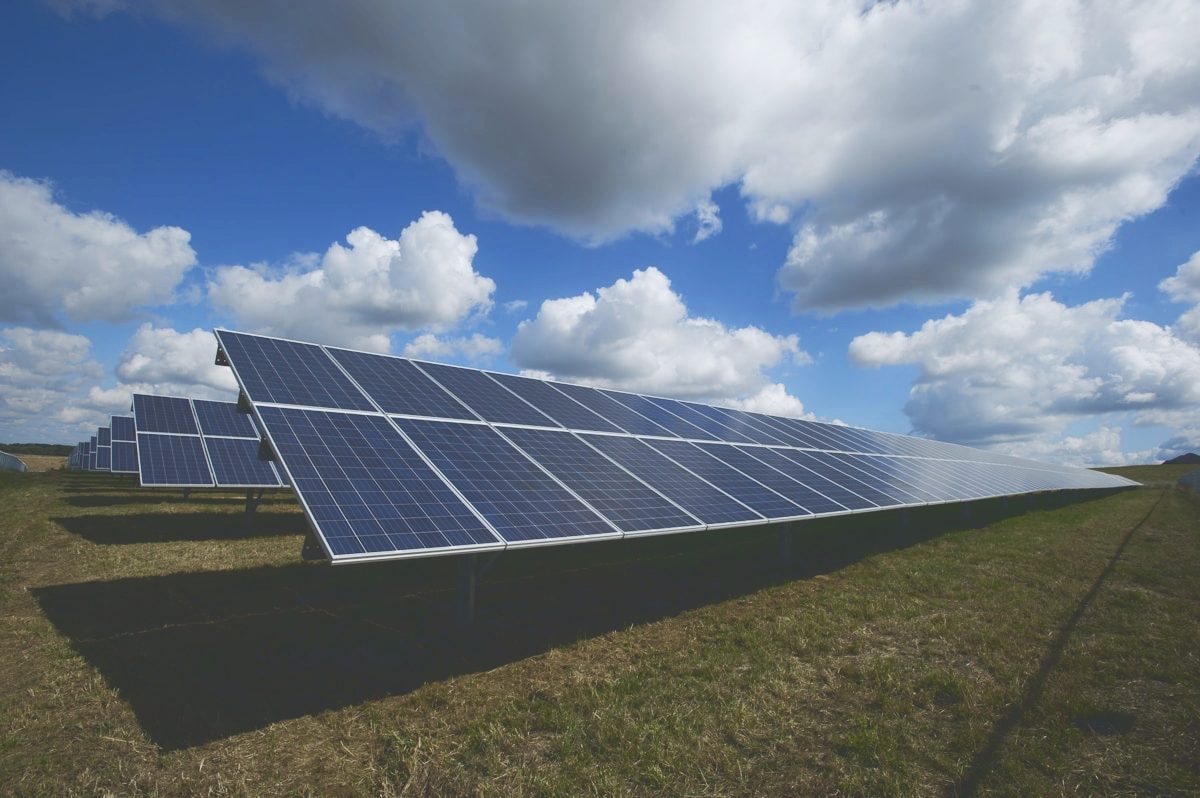
Computed as 90° minus latitude, plus or minus Earth’s 23.44° tilt, rounded. Tilt: NASA, Earth Fact Sheet (updated 15 Nov 2024; checked 9 Oct 2026).
Pennsylvania solar rules at a glance
- The utility that supplies your power credits your system’s output at the full retail rate, up to your use in the billing period, and carries extra kilowatt-hours forward.52 Pa. Code 75.13(d)
- A home system can be up to 50 kW, and utilities provide net metering first come, first served.75.13(a)
- For an inverter-based system of 10 kW or less, your utility has 10 business days to say whether your request is complete and 15 more to review it.75.37(c)
- A contractor’s registration is searchable in the Attorney General’s lookup, and the office says registration is not an endorsement or recommendation of the contractor’s competency or skill.Attorney General lookup
Source: 52 Pa. Code 75.13 and 75.37 (current through 8 Aug 2026); PECO Supplement 24 (effective 1 Apr 2026); FirstEnergy Supplement 40 (effective 1 Oct 2026); Pennsylvania Office of Attorney General lookup (undated). Checked 9 Oct 2026.
How does net metering work in Pennsylvania?
In Pennsylvania, net metering means the utility that supplies your power counts what your system sends to the grid against what it delivers to you (52 Pa. Code 75.13(d)). It credits each kilowatt-hour at the full retail rate, which includes generation, transmission and distribution charges, up to your use in the billing period, and carries extra credit forward. In plain terms, the power your roof makes at midday offsets the power you use after dark.
A home system can be up to 50 kW, and utilities provide net metering first come, first served (75.13(a)). The PPL, PECO, Duquesne Light and FirstEnergy tariffs repeat the 50 kW limit for residential service.
What if you buy electricity from a supplier?
If you buy from an electric generation supplier, a company that sells you power over your utility’s wires, your credit terms come from your supplier agreement (52 Pa. Code 75.13(f)). Your utility credits distribution charges at its distribution rate. Suppliers need not provide net metering (75.13(b)), and PECO’s tariff says unused distribution credits do not carry over to the next year (Rate RS-2, p. 56). Before you enroll, contact a supplier to find out whether it credits the power you send back, as the PUC’s fact sheet advises, and ask for the answer in writing.
Does solar end your electric bill?
No. The PPL, PECO and Duquesne Light tariffs each keep the customer charge and other applicable charges on a net-metered account, and FirstEnergy’s rider keeps the distribution charge and other applicable charges (PPL Rider p. 21B, PECO Rate RS-2 p. 55, Duquesne Light Rider 21 p. 134, FirstEnergy Net Metering Rider p. 189).
Which Pennsylvania utility serves your home?
Your electric bill names your utility, and the Pennsylvania Public Utility Commission (PUC) regulates 11 electric distribution companies, the utilities that deliver power to homes and businesses across Pennsylvania. PAPowerSwitch, the shopping site the PUC runs, asks for your ZIP code and then asks you to select and confirm your company.
Some counties have more than one utility, so your address decides. Bucks County, for example, appears in the territory lists of PECO, PPL and FirstEnergy’s Met-Ed rate district.
How long do utilities take to review a Level 1 request?
In the PUC’s 2025 reporting year, mean Level 1 review times ran from 1 to 23 days across the 11 utilities, and the PUC says every large utility’s mean stayed within the 25-business-day requirement. Level 1 is the Code’s category for inverter-based systems of 10 kW or less (52 Pa. Code 75.34(1)). The PUC counted 87,980 customer-generators, its term for customers with their own net-metered generation, on 31 May 2025, and 87,579 of them were solar.
| Utility | Customer-generators on 31 May 2025 | Level 1 requests received | Mean days to complete Level 1 |
|---|---|---|---|
| Citizens’ Electric of Lewisburg | 78 | 6 | 2 |
| Duquesne Light | 10,322 | 2,139 | 21 |
| Met-Ed | 15,354 | 2,354 | 12 |
| PECO Energy | 23,528 | 2,882 | 10 |
| Penelec | 3,547 | 644 | 13 |
| Penn Power | 1,314 | 295 | 12 |
| Pike County Light & Power | 39 | 6 | 23 |
| PPL Electric Utilities | 28,819 | 4,008 | 10 |
| UGI Utilities | 348 | 129 | 5 |
| Wellsboro Electric | 41 | 6 | 1 |
| West Penn Power | 4,590 | 783 | 9 |
Source: PUC, Net-Metering and Interconnection Report 2023-25, Tables 2A, 4A and 5A (printed pp. 6, 12 and 21), and Electric Companies and Suppliers (undated); PAPowerSwitch; territory lists in the PECO tariff p. 4, PPL tariff p. 4 and FirstEnergy tariff p. 8. The tables say “days”; the report’s text counts Level 1 review in business days. The means for Citizens’ Electric, Pike County Light & Power and Wellsboro Electric rest on six requests each. Past figures, not a forecast. Checked 9 Oct 2026.
How does a home solar system connect to the grid in Pennsylvania?
For an inverter-based system of 10 kW or less, the Level 1 rule gives your utility 10 business days to check that a request is complete and 15 more to review it (52 Pa. Code 75.37(c)). The Code sets that limit at a nameplate capacity of 10 kW or less (75.34(1)) and the PUC’s report states it as 10 kWac, so ask any installer for the system size in both kW DC and kW AC.
What are the steps from request to connection?
Six steps run from your installer’s application to the utility’s Permission to Operate.
Your installer applies to your utility
The utility has 10 business days to say whether the request is complete.
The utility reviews the request
The utility has 15 more business days to verify that the system can connect safely and reliably, and it must accept the request unless it shows that it cannot.
The system is permitted, built and inspected
Local electrical code officials sign off, and a Certificate of Completion, the form that records the equipment and its inspections, goes to the utility. PECO’s brochure adds that the installer first gets a construction permit from the municipality and may need permission from a homeowners association or historical review board.
The witness test
The utility can test within 10 business days of receiving the Certificate of Completion, or at a time you agree; otherwise the test is treated as waived.
You sign the interconnection agreement
Sign the utility’s standard agreement within 30 business days of receiving it, or the request is treated as withdrawn unless you ask for more time.
The utility gives Permission to Operate
Permission to Operate is the utility’s letter authorizing you to run the system, and utilities word this step in their own way.
Source: 52 Pa. Code 75.37(c) and 75.34(1) (current through 8 Aug 2026); PPL tariff p. 24F, footnotes 2 and 3; PECO, Interconnection Brochure SOL1006, step 6 (Rev. 12/2024). Checked 9 Oct 2026.
When may you switch the system on?
PECO, PPL and FirstEnergy word this step differently, and each includes the utility’s authorization to operate.
| Utility | In its own description | Source |
|---|---|---|
| PECO Energy | PECO issues the Permission to Operate letter once the bi-directional meter is installed, and only then may the installer activate the system. | Brochure SOL1006, steps 7 to 9 (Rev. 12/2024) |
| PPL Electric Utilities | After installation and before activation, you submit the Certificate of Completion online. Once PPL accepts it, you receive Permission to Operate. | PPL net-metered distributed energy page (undated) |
| FirstEnergy: Met-Ed, Penelec, Penn Power, West Penn Power | After installation, the customer submits the final agreement, a Certificate of Completion and evidence of electrical inspection. FirstEnergy reviews the as-built installation, authorizes operation and then replaces the meter with a bi-directional one, and says it will not track or credit excess generation until that meter is installed. | FirstEnergy interconnection page (last modified 28 Sep 2026) |
At PECO, a residential Level 1 or Level 2 application expires if PECO has no completed Certificate of Completion within 180 calendar days of approving it. You can ask in writing, at least 30 days before the expiry date, for an extension of up to 180 days for good cause (Rate RS-2, p. 56, effective 1 Jan 2025). Duquesne Light, UGI and the three smallest utilities publish their own steps at the links in the utility table.
Does Pennsylvania have a rebate or incentive for home solar?
The credit equaled 30% of eligible costs
- 2022
- 2023
- 2024
- 2025
- For property placed in service after that date
Pennsylvania’s Department of Environmental Protection names no state rebate or grant for home solar on its residential solar page. It lists net metering and Renewable Energy Credits, which it says are administered through the Alternative Energy Portfolio Standards Act; the Code and the PUC’s fact sheet call them alternative energy credits.
To earn credits, the PUC’s fact sheet says the owner applies to the PUC’s alternative energy credit administrator and registers the system with PJM’s Generation Attribute Tracking System. An aggregator can take those steps for the owner, with the owner’s permission.
What ended with the federal solar tax credit
Source: Department of Environmental Protection, residential solar page (undated); 52 Pa. Code 75.13(i) and 75.1; PUC fact sheet (updated Oct 2024); Internal Revenue Service, “Residential Clean Energy Credit” (updated 4 Jul 2026). Checked 9 Oct 2026.
How do you check a solar installer in Pennsylvania?
Ask the installer for its Attorney General registration number, then search the number or business name in the Attorney General’s lookup; a match shows a registration, not the quality of the work.
Pennsylvania’s Home Improvement Consumer Protection Act (the Act) bars anyone from holding out as a contractor, or doing home improvement work, without first registering with the Attorney General. It lists solar energy systems at a private residence among covered work when the total cash price is more than $500, and a person whose home improvements totalled less than $5,000 in the previous taxable year is not a contractor under it (73 P.S. 517.2, 517.3(a)).
How to look up an installer’s registration
Ask for the registration number
The Act requires a contractor to put it on all advertisements, contracts and estimates.
Search the number or the business name
Use the Attorney General’s lookup, or call the Attorney General’s Bureau of Consumer Protection at 1-888-520-6680.
Match the details
The search shows active registrations only, and registrations run for two years. Check that the name, address and phone number match your estimate.
Skip the Type of Work filter
It has no solar choice, and the page warns that data is limited for most existing contractors.
Read a match for what it is
The Attorney General says registration is not an endorsement or recommendation of the contractor’s competency or skill. A match confirms a registration, not the quality of the work.
Source: Pennsylvania Office of Attorney General, Home Improvement Contractor Registration, lookup and FAQ (undated); the Act, 73 P.S. 517.2, 517.3 and 517.6 (amended 22 Oct 2014; no later amendment on the office’s updates page, undated). The online registration system went live on 24 April 2026. Checked 9 Oct 2026.
What about electricians and local rules?
Pennsylvania has no statewide credential requirement for most construction contractors, and some of its 2,562 municipalities set their own. The Department of Labor & Industry says local requirements typically cover home improvement, electrical and plumbing contractors, so for the electrical work on a solar job, ask your municipality what it requires. Source: Department of Labor & Industry contractor page (undated; checked 9 Oct 2026).
What should a Pennsylvania home improvement contract show?
A home improvement contract is not valid or enforceable against you unless it meets the Act’s list (73 P.S. 517.7(a)).
| Line | What the Act says | Section |
|---|---|---|
| Form and signatures | Written, legible, with the contractor’s registration number, signed by you or your agent and by the contractor or a salesperson; the entire agreement, required notices attached, and the transaction date. | 517.7(a)(1) to (4) |
| Who is involved | The contractor’s name, address and telephone number (a post office box alone is not an address), and the same details for every subcontractor known at signing. | 517.7(a)(5), (10) |
| Dates and scope | Approximate starting and completion dates, the work, the materials and specifications that change only by a written change order you and the contractor sign. | 517.7(a)(6) to (7) |
| Money | The total sales price, or time-and-materials terms; the down payment and any special-order materials, listed separately. | 517.7(a)(8) to (9) |
| Insurance | Personal injury liability coverage of at least $50,000 and property damage coverage of at least $50,000, with the current amount stated. | 517.7(a)(11) |
| Notices | The telephone number of the Attorney General’s Bureau of Consumer Protection and a notice of your right of rescission. | 517.7(a)(12) to (13) |
Source: Pennsylvania Office of Attorney General, Home Improvement Consumer Protection Act, 73 P.S. 517.7(a). Checked 9 Oct 2026.
The Attorney General’s FAQ says the insurance minimums are not related to contractor performance or quality of work. The Act bars payment demands before signing and, on contracts above $5,000, deposits above one-third of the price plus special-order materials, with an exception for certain retailers (517.9(9), (10)). You can void a contract that contains a hold-harmless clause, a building-code waiver, a jury-trial waiver, a clause awarding the contractor attorney fees, or a waiver of your rights under the Act (517.7(e)).
What is changing for solar in Pennsylvania?
Date set in the tariffs: 31 May 2027, when the credit year ends at PPL, PECO and Duquesne Light.
| Date | What happens | Source |
|---|---|---|
| The credit year ends at PPL, PECO and Duquesne Light. | Tariff pages |
How do you compare solar quotes before you sign?
Look for the same seven lines on every quote: system size and equipment, expected first-year output, total price and what it leaves out, how you pay, incentives assumed, warranties and dates. A missing line is a question for the installer, and the answer belongs in writing.
My Solar Brokers is a comparison website that connects homeowners with installer partners. We do not install solar, and quotes come from installer partners only, so a comparison does not cover every installer.
Open the printable checklist and worked example How comparing solar quotes works
Questions homeowners ask about solar in Pennsylvania
Does solar end your electric bill in Pennsylvania?
No. The PPL, PECO and Duquesne Light tariffs each keep the customer charge and other applicable charges on a net-metered account, and FirstEnergy’s rider keeps the distribution charge and other applicable charges. The tariff pages
How big can a home solar system be for net metering in Pennsylvania?
Up to 50 kW at a residential service location, provided first come, first served (52 Pa. Code 75.13(a)). How net metering works
How long does a Pennsylvania utility have to review a connection request?
For an inverter-based system of 10 kW or less, 10 business days to say whether the request is complete and 15 more to review it (52 Pa. Code 75.37(c)). The connection steps
How do you check that a solar installer is registered in Pennsylvania?
Search its Attorney General registration number or business name in the lookup, or call the Bureau of Consumer Protection at 1-888-520-6680. A match shows a registration, not the quality of the work; the Attorney General says registration is not an endorsement or recommendation. The lookup, step by step
Does Pennsylvania have a state rebate for home solar?
Pennsylvania’s Department of Environmental Protection names no state rebate or grant on its residential solar page; it lists net metering and Renewable Energy Credits. Incentives in Pennsylvania
Sources
Publisher, document and page, with the source’s own date or “undated”. Checked 9 Oct 2026.
- Pennsylvania Code and Bulletin: 52 Pa. Code 75.1, 75.13, 75.34, 75.37 (current through 56 Pa.B. 5370, 8 Aug 2026).
- Pennsylvania Public Utility Commission: Electric Companies and Suppliers (undated); Net-Metering and Interconnection Report 2023-25; “Using Alternative Energy at Home in Pennsylvania” (updated Oct 2024); PAPowerSwitch and glossary (undated).
- PPL Electric Utilities: Supplement No. 2 to Electric Pa. P.U.C. No. 202, pp. 4, 21B, 24F, 24G (effective 1 Jul 2026); Net Metered Distributed Energy (undated).
- PECO Energy: Electric Service Tariff, Supplement 24 (effective 1 Apr 2026), p. 4 and Rate RS-2, pp. 54 to 56; Interconnection Brochure SOL1006 (Rev. 12/2024).
- Duquesne Light Company: Tariff Supplement 107 (effective 1 Jul 2026), Rider 21, pp. 133 to 136; Interconnection Requirements (undated).
- FirstEnergy Pennsylvania Electric Company: Electric Pa P.U.C. No. 1, Supplement 40 (effective 1 Oct 2026), territory pp. 6 to 20 and Net Metering Rider pp. 187 to 191; interconnection page (last modified 28 Sep 2026).
- UGI Utilities: Net Metering; Citizens’ Electric of Lewisburg: customer-owned generation; Pike County Light & Power: home page; Wellsboro Electric: customer generators (all undated).
- Pennsylvania Department of Environmental Protection: Solar Energy Resources for Residents (undated). Department of Labor & Industry: contractor requirements page (undated).
- Pennsylvania Office of Attorney General: Home Improvement Contractor Registration, lookup, FAQ (undated), updates page (undated) and Home Improvement Consumer Protection Act (amended 22 Oct 2014).
- Internal Revenue Service: “Residential Clean Energy Credit” (page updated 4 Jul 2026).
- NASA: Earth Fact Sheet (updated 15 Nov 2024), for the sun heights beside the photograph, computed as 90° minus latitude, plus or minus 23.44°, rounded to the nearest degree, atmosphere ignored. U.S. Census Bureau: 2025 Gazetteer Files, for the latitude of Philadelphia.
Rules and tariffs are quoted as published on the dates shown. Your utility’s current tariff and your own contract set the terms that apply to your home.
Start with your ZIP code